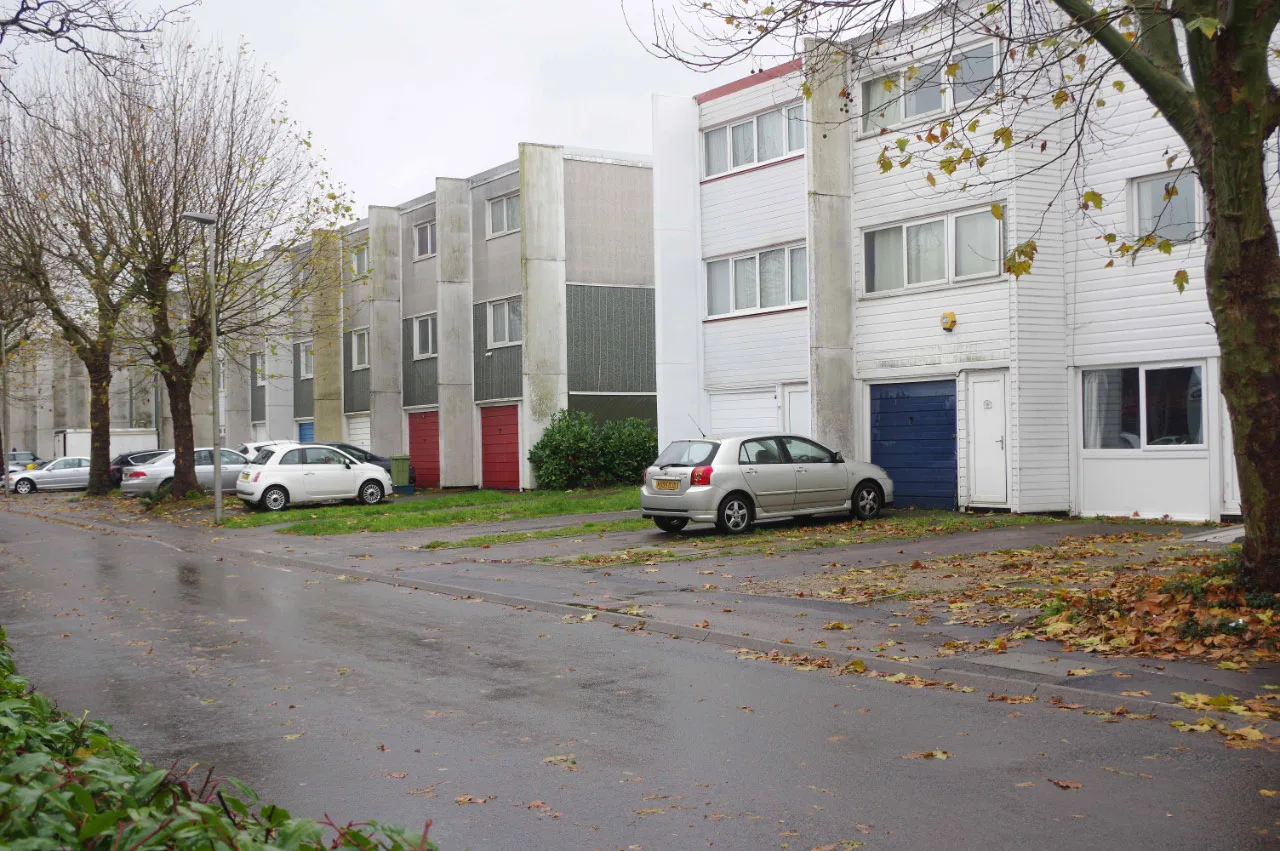

Flood defences for 138 homes in Woughton's estates and Lavendon will not start this year. Building is now forecast for 2027 to 2028, with drop-ins this autumn.
Flood defences for 138 homes in Milton Keynes have slipped into next year. Work on schemes for seven estates in Woughton and for the village of Lavendon had been expected to start in late 2026. It is now forecast to run through 2027, with building in 2027 and 2028.
The council’s flood and water manager sets out the new timetable in a report to the Environment and Place Scrutiny Committee, which meets tonight, Wednesday 14 October. It blames:
- changes to national flood funding guidance
- extra technical checks required by the Environment Agency
- more hydraulic modelling
- a shortage of consultants
The report says both schemes “remain on course” and still have their outside funding.
Who the schemes are for
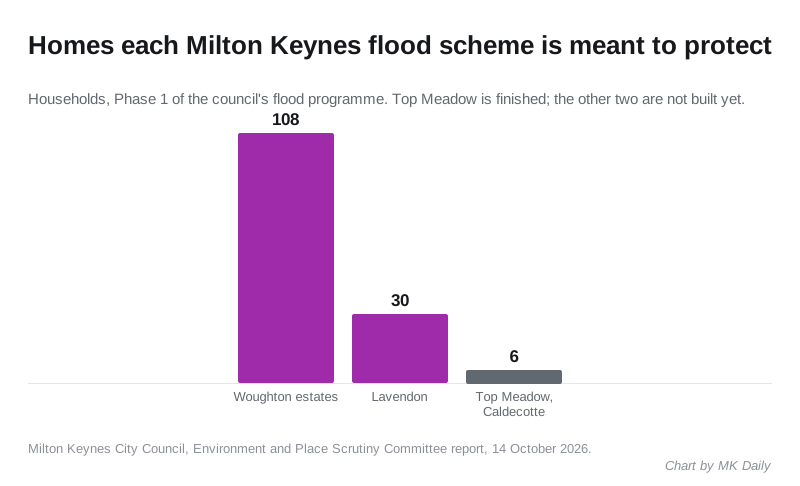
The Woughton scheme is meant to better protect about 108 households across:
- Beanhill
- Coffee Hall
- Eaglestone
- Leadenhall
- Netherfield
- Peartree Bridge
- Tinkers Bridge
The area flooded badly in 2018, 2020, 2021 and 2024, the report says. The council’s January report adds November 2025, when pumps were used in Coffee Hall to keep water out of homes. It also says the May 2018 storm affected an estimated 1,000 properties across Milton Keynes, half of them flooded inside, with 315 in the south of the city.
The plan for Woughton is mostly swales, rain gardens and storage areas that hold surface water back and slow it down.
The Lavendon scheme targets about 30 households in the village, roughly ten miles north-east of Central Milton Keynes. The streets named are New Row, Northampton Road, Castle Road, Olney Road and The Glebe. The January report records 44 properties affected by flooding in Lavendon in September 2024. The plan combines flood storage, land regrading and drainage work. Options at Northampton Road have been looked at again after new modelling.
A third, smaller scheme at Top Meadow in Caldecotte is finished. It reduced flood risk to six homes.
The money
The council approved the schemes on 20 January 2026. They cost £3.080 million between them. The council is putting in £1.261 million and the rest comes from Government and the regional flood committee.
| Scheme | Total | Council share | Environment Agency share |
|---|---|---|---|
| Lavendon | £2,105,000 | £907,000 | £1,198,000 |
| Woughton | £975,000 | £354,000 | £621,000 |
In January, £882,000 of that was planned to be spent in this financial year, 2026/27. The new timetable puts construction in 2027 to 2028, so more of the spending will fall later.
What happens next
The report’s timetable is:
- End of October 2026: draft concept designs for both schemes arrive from the consultant.
- October and November 2026: a residents’ drop-in for each scheme, and meetings with Lavendon and Woughton parish councils.
- 3 November 2026: Cabinet decides on procurement for the next stage.
- November and December 2026: talks with landowners where private land is needed.
- 2027: detailed design, approvals and land agreements.
- 2027 to 2028: construction.
The council is also planning sustainable drainage planters in Newport Pagnell, Stony Stratford and Wolverton. A second phase would look at surface water flooding in Newport Pagnell and a property flood resilience project for individual homes. Neither has a timetable yet.
What it means for you
If you live in one of the Woughton estates or in Lavendon, the defences will not be in place this winter. Plan on the basis that they will not be built until 2027 at the earliest.
The drop-in sessions this autumn are the first chance to see the designs. Lavendon residents will hear about them through the parish council. Woughton dates will go out through the parish council and the council’s social media.
Meanwhile, you can sign up for free flood warnings from the Environment Agency. For road closures caused by flooding, see our roadworks and travel page.
Have your say