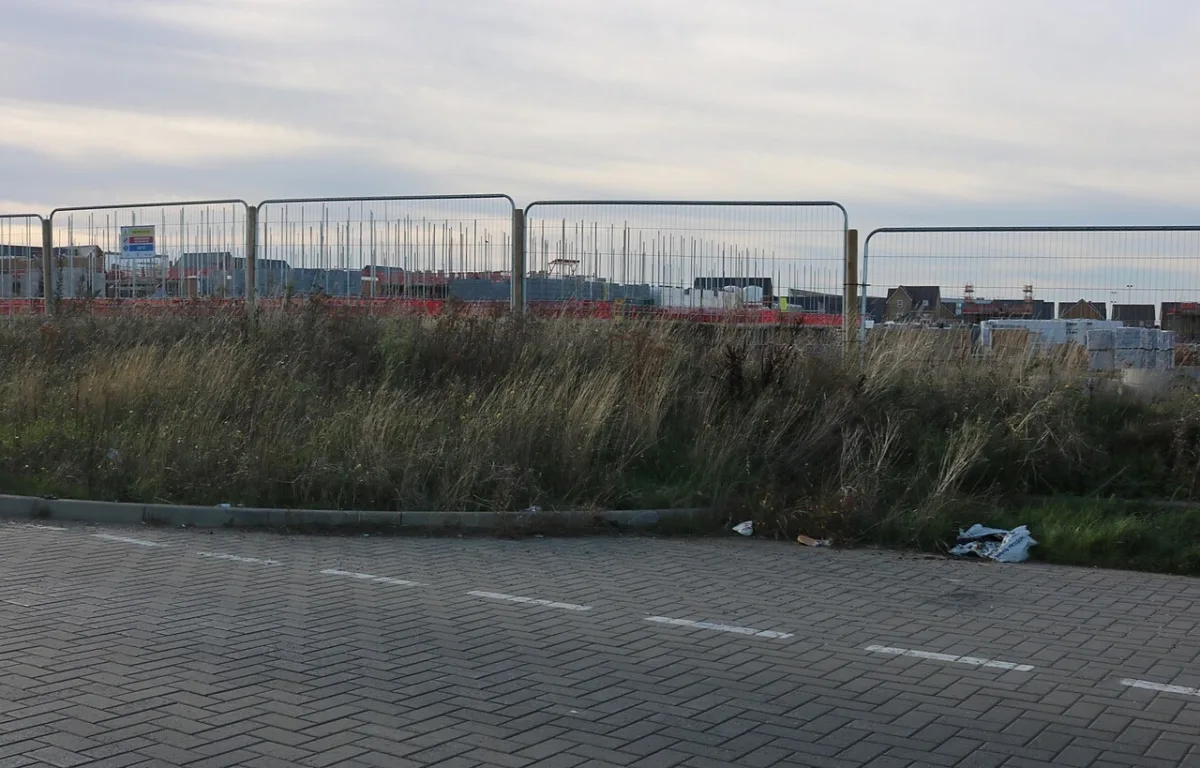

Hearings into the MK City Plan 2050 open on 15 September 2026. The plan sets a minimum of 50,372 new homes by 2050 and five new city extensions.
Two planning inspectors will sit down in Margaret Powell House on Tuesday 15 September 2026 and start testing whether Milton Keynes can build 50,372 new homes by 2050. That hearing is the most consequential planning event in the city for a decade, because the plan it examines decides where almost every new house in Milton Keynes goes for the next 24 years.
Here is what the plan proposes, where it puts the homes, where it stands in the process, and what any of it means if you live next to one of the sites.
What is happening
The MK City Plan 2050 was submitted to the Planning Inspectorate on 22 April 2026. Inspectors P Mileham and S Hubbard were appointed five days later, on 27 April, to hold an independent examination of whether the plan is sound and legally compliant.
The examination has been running on paper since. The inspectors issued initial questions on 4 June 2026 and the council answered them on 23 June. On 27 July the inspectors published their guidance notes, the list of matters, issues and questions they intend to test, and the hearings programme. The Regulation 24 notice of hearing sessions went out on 28 July.
Hearing sessions open at 10am on Tuesday 15 September 2026 at Margaret Powell House. These are public. (MK City Plan 2050 Examination)
The plan replaces Plan:MK, adopted five years ago.
The numbers
Policy GS2 of the submitted plan commits Milton Keynes to a minimum of 50,372 net new homes over the period 2022 to 2050. To make sure that minimum is actually met, the council has planned for 59,779 homes, a deliberate buffer of 9,407 on top.
The single biggest line is not a new site at all. 22,705 homes are completions and commitments: houses already built since 2022, sites under construction, sites with planning permission, and allocations rolled forward from Plan:MK and made neighbourhood plans. In other words, well over a third of the plan is already happening.
The second biggest is 16,000 homes in Central Milton Keynes and Campbell Park. That is a real shift in what MK is. The city was built at low density around a grid; the plan proposes to put more than a quarter of its new homes in the centre.
The five new city extensions
Beyond the centre, the plan allocates five Strategic City Extensions on land outside the current built-up edge, together delivering 13,550 homes by 2050:
- Eastern Strategic City Extension, 7,750 homes by 2050. Much the largest, and the council estimates the site can eventually take around 16,000 homes in total, beyond the plan period. It extends the city past the already-permitted Milton Keynes East urban extension. The plan describes it as transit-oriented, built around new Metro services and active travel routes, with employment land and Gypsy and Traveller pitches. Because of its scale the council will produce a separate Framework Masterplan for it with a developer consortium.
- East of Wavendon, 2,250 homes, from 2038. Deliberately held back until the growth already planned to the south and south east is substantially complete, so the infrastructure effects are demonstrable first. The council also wants room to explore cross-boundary growth with Central Bedfordshire.
- South of Bow Brickhill, 1,300 homes, and Levante Gate, 1,250 homes. Both south of the city. The council’s own evidence base says these sit in more sensitive landscape, near the Brickhills Special Landscape Area, and requires growth there to be landscape-led. Community facilities at Levante Gate are also intended to serve Eaton Leys.
- Shenley Dens, 1,000 homes, south west of the Western Expansion Area and west of Grange Farm, again in sensitive landscape near the Calverton Special Landscape Area.
Other allocations include 2,500 homes along Metro Corridors inside the existing built-up area, 1,184 in Central Bletchley, and two brownfield sites: Walton Campus (450) and Wolverton Railway Works (400). A further 2,990 are expected from windfall, meaning small sites of fewer than 10 homes, at about 115 a year.
The plan also provides 69 new Gypsy and Traveller pitches over the period, part of a total need for 75 by 2050.
How the target was arrived at
The figure moved during the process. The Regulation 18 draft, consulted on from July to October 2024 and drawing over 7,000 comments, worked from a range of 53,245 to 63,000 homes, and used the bottom of that range, 1,902 homes a year, to calculate the council’s five-year housing land supply and Housing Delivery Test.
The submitted plan works from a revised local housing need of 1,799 dwellings a year. Across the 28-year plan period that comes to exactly the 50,372 minimum. The 59,779 the council has actually planned for is a 19% buffer on top, which the plan describes as standard practice to absorb under-delivery. The council notes that previous local plans, neighbourhood plans and permissions outside Central Milton Keynes already account for close to 23,000 homes due by 2050, so the plan needs to allocate land for roughly 37,000 more.
Homes for older people and those with specific needs come out of the 50,372 rather than being additional to it.
The Regulation 19 consultation on the final draft ran from 7 November to 22 December 2025, then reopened from 5 January to 16 February 2026 after a technical fault with the notification emails meant some people did not hear about it.
What it means for you
If a site near you is allocated in this plan, that is not the same as permission to build. It means the principle of development there has been accepted in policy, which makes refusing a later detailed application much harder. So the examination, not the eventual planning application, is the stage where the argument is actually had.
Practical points:
- The hearings are public and start 15 September 2026. If you made a representation at Regulation 19, the programme officer will have told you whether you can appear on the matters that concern you. The programme officer is Ian Kemp.
- The test now is soundness, not preference. Inspectors ask whether the plan is positively prepared, justified, effective and consistent with national policy. “I do not want it” is not a soundness argument; “the transport evidence does not support this quantum of growth” is.
- Check which category your area falls into. Being in the 22,705 completions and commitments means the decision is already made. Being in one of the five city extensions means it is live at this examination.
- Individual applications carry on regardless. Day-to-day planning decisions keep being made while the plan is examined.
The eastern side of the city carries most of the change, which is also where the council’s MK East highway schemes are going in, and where the busiest housing market in the city already is: MK10 recorded 254 sales in the last twelve months.
What happens next
After the September hearings the inspectors may require main modifications, which would go out to further public consultation before they report. Only then can the council adopt the plan. We will update this page as the hearings run.
Sources
- MK City Plan 2050 Examination, programme officer’s site for the submission date, inspectors, hearing date and examination timetable.
- MK City Plan 2050, Regulation 19 final version (PDF) for Policy GS2, Table 1 and the Strategic City Extension descriptions.
- Milton Keynes City Council, MK City Plan 2050 for the consultation stages and reopened Regulation 19 window.
- Milton Keynes City Council, other consultation documents for the policies maps and consultation statement.
- MK City Plan 2050, Regulation 18 draft (PDF) for the earlier 1,902 homes a year figure and the 53,245 to 63,000 range.
Figures are those in the submitted plan and may change if the inspectors require main modifications.
Have your say