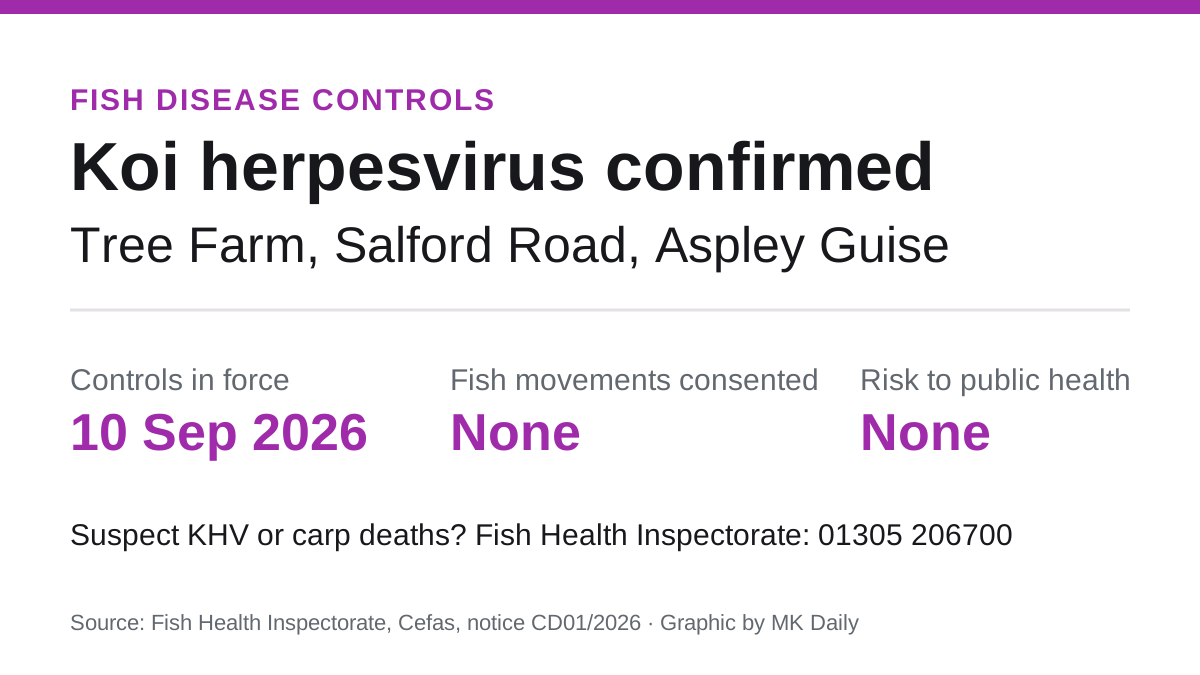

Koi herpesvirus is confirmed in carp at a fish growing site on Salford Road, Aspley Guise, near Milton Keynes. No fish may move in or out of it.
Koi herpesvirus disease has been confirmed in carp at a fish growing site in Aspley Guise. The government has banned any movement of fish into, out of or within the site.
The site is the Growing Facility at Tree Farm, Salford Road, Aspley Guise. The village has a Milton Keynes postcode (MK17) but sits in Central Bedfordshire, less than a mile east of Woburn Sands and around six miles from central Milton Keynes.
The controls are set out in a confirmed designation notice from the Fish Health Inspectorate (FHI), part of the government’s Cefas laboratory. It was made and came into force on 10 September 2026. The government listed the outbreak on 14 September.
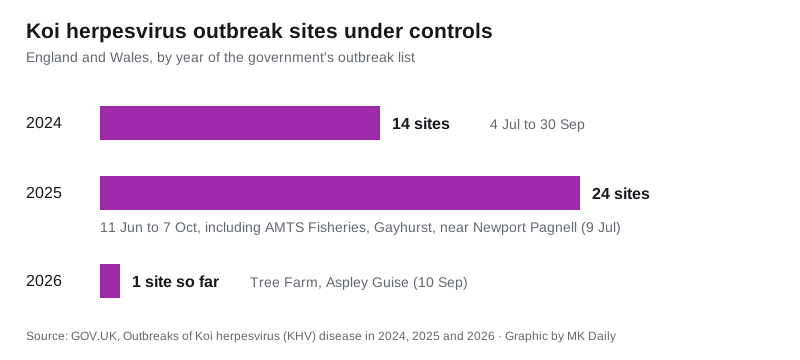
It is the only outbreak on the government’s 2026 list so far. The notice is numbered CD01/2026.
There is no risk to public health, the government says. The disease affects fish, not people.
What the controls mean
The notice covers all facilities at the site. Without written consent from the FHI, nobody may move:
- any live fish, eggs or gametes into, out of or within the site
- any equipment, material or substance that could carry the disease
- any vehicle or other transport that could carry the disease
The FHI has consented to no fish movements at all. Dead fish must be disposed of as Category 2 animal by-product waste, in line with local environmental health requirements.
Breaking the conditions is a criminal offence. On conviction the fine can be unlimited, the notice says.
The designation stays in force until the FHI is satisfied the disease is no longer present. It replaces an earlier initial designation, ID11/2026.
What koi herpesvirus is
Koi herpesvirus (KHV) is a serious viral disease of common carp and ornamental carp, including koi. It is a listed disease under the Aquatic Animal Health (England and Wales) Regulations 2009, and it can kill fish in large numbers.
Signs are most likely when the water is between 16 and 28°C. They include:
- white or brown dead patches on the gills
- rough patches on the skin and shedding mucus
- sunken eyes
When the FHI confirms an outbreak, the government says it may restrict movements, tighten biosecurity, cull fish, and clean and disinfect the site.
How this year compares
The government’s 2025 list named 24 sites in England and Wales, from 11 June to 7 October. The 2024 list named 14 sites, from 4 July to 30 September.
One of the 2025 sites was local. Controls were placed on AMTS Fisheries at Gayhurst, near Newport Pagnell, on 9 July 2025. All the 2025 controls have since been lifted, according to the page’s change history.
What it means for you
If you keep koi or carp in a garden pond, the virus is not a risk to you or your family. It is a risk to your fish. The government’s guidance on preventing fish disease covers biosecurity and the rules on moving fish.
If you fish carp waters around Milton Keynes, the same guidance applies. The FHI registers recreational fisheries, and its advice for limiting disease includes following the rules when moving fish and keeping a biosecurity plan.
If you see signs of KHV or carp dying, you must tell the FHI. Its details are on the Fish Health Inspectorate page:
- telephone 01305 206700, with a 24-hour on-call service for reporting suspected disease
- email fhi@cefas.gov.uk
Have your say