
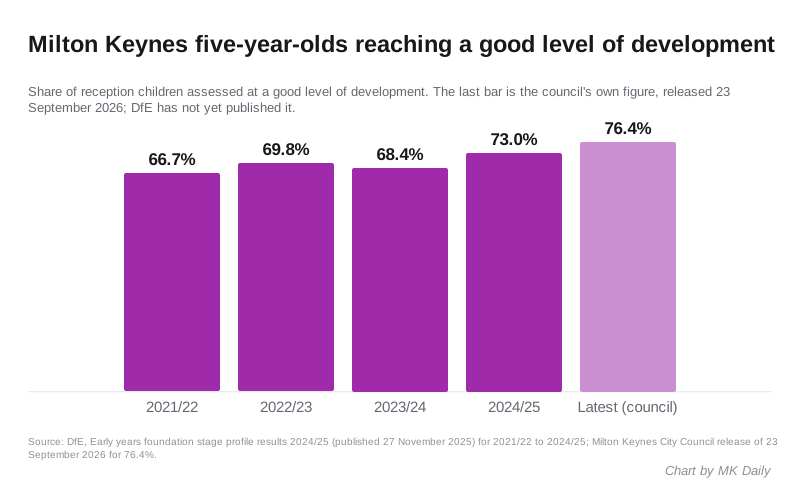
76.4% of MK five-year-olds reached a good level of development, the council says, past the 2028 target of 75%. Official data put MK 14th of 153 last year.
More than three in four five-year-olds in Milton Keynes reached a “good level of development” at the end of Reception, according to Milton Keynes City Council. Its figure is 76.4%.
That is already above the national target of 75% of five-year-olds by 2028. The council announced the result on 23 September.
The official figures back up the direction of travel. They also show one thing the announcement leaves out: the national average it compares itself with is last year’s.
What the figure measures
Reception teachers assess every child against 17 early learning goals in the summer term. A child who reaches the expected level in the 12 goals across five key areas is counted as having a good level of development. The five areas are:
- communication and language
- personal, social and emotional development
- physical development
- literacy
- mathematics
It is the main measure the government uses for whether children are ready for Year 1.
How Milton Keynes compares
The Department for Education publishes the figures for every council each November. Its latest release, for 2024/25, put Milton Keynes at 73.0% against 68.3% for England.
We ranked all 153 councils in that release. Milton Keynes came 14th. Only four councils reached 76.4% or more that year: the Isles of Scilly, the City of London, Wokingham and Richmond upon Thames.
Milton Keynes was ahead of every neighbouring council:
| Council | Good level of development, 2024/25 |
|---|---|
| Milton Keynes | 73.0% |
| Buckinghamshire | 71.4% |
| Oxfordshire | 70.4% |
| West Northamptonshire | 70.3% |
| Bedford | 68.6% |
| Central Bedfordshire | 68.2% |
| North Northamptonshire | 67.0% |
| Luton | 64.0% |
| England | 68.3% |
Source: DfE, Early years foundation stage profile results 2024/25, headline measures by local authority.
The catch in the comparison
The council’s release compares 76.4% with “the national average of 68.3%”. That 68.3% is England’s figure for 2024/25.
The 76.4% cannot be from the same year, because the DfE’s figure for Milton Keynes that year was 73.0%. The release does not say which year its figure covers. It is most likely from assessments made this summer, which the DfE has not yet published.
England’s own figure for this summer is due in October. National results have risen every year since 2021/22, from 65.2% to 68.3%. So the gap may turn out narrower than the 8.1 points the council’s comparison suggests.
On the like-for-like figures, Milton Keynes was 4.7 points above England in 2024/25. That is its widest lead in the four years published.
Two claims in the release are also wider than the data. It says Milton Keynes children are better prepared “than pupils in most other areas of the UK”. These assessments cover England only. It also calls this year’s figure a “record”. That is true of the four years on the DfE’s current series, which starts in 2021/22 after the assessment was reformed.
Free early education for two-year-olds
The council also says 83% of eligible two-year-olds have a funded early education place. The DfE’s funded early education figures, published in July, confirm it:
- Milton Keynes: 512 of an estimated 614 eligible two-year-olds were registered in January 2026, or 83.4%.
- England: 71.6%.
The council calls that “11% higher than the national average”. It is 11.8 percentage points higher.
The share was higher two years ago: 86.0% in January 2024. It fell to 78.8% in January 2025 before rising again.
What it means for you
If you have a two-year-old and a low income, you may be able to get up to 15 hours of free early education a week, for 38 weeks a year. The council runs this as Time for Twos. Families qualify if they get one of a list of benefits, including:
- Universal Credit, with a household income under £15,400 a year after tax
- Child Tax Credit or Working Tax Credit, with a household income under £16,190 before tax
- income support, income-based Jobseeker’s Allowance or income-related Employment and Support Allowance
Children with an education, health and care plan or Disability Living Allowance also qualify, as do children in care. You check eligibility on the council’s parent portal, and the answer is immediate.
If your child turns two between September and December, the place starts in the spring term, on or after 1 January.
Our school term dates page has this year’s and next year’s school holidays.
We will update this story when the DfE publishes the official 2025/26 figures in October.
Have your say